Top Water Damage Inspection Techniques Every Property Needs
Water Damage Inspection Methods You Need to Know: Expert Techniques for Homeowners
Water intrusion often hides behind walls and ceilings, silently destroying your home’s structural integrity and fueling dangerous mold growth. A single inch of floodwater can devastate your property with over $25,000 in damage, making immediate, expert water damage inspection methods absolutely essential to protect your home and your family’s health. In this critical guide, you will discover what water damage truly is, how to spot both visible and insidious hidden signs, which advanced tools and techniques our experts deploy, the step-by-step assessment process, why DIY inspections fall dangerously short, and how to respond immediately when an emergency strikes. Along the way, learn how National Emergency Water Damage Experts’ 24/7 rapid-response team applies IICRC-certified standards to identify and halt damage before it escalates into a catastrophic problem.
What Is Water Damage and How Does It Affect Your Home?
Water damage refers to unwanted moisture intrusion that rapidly degrades building materials, promotes dangerous microbial growth, and undermines your home’s very foundation. Understanding its types, causes, and devastating effects lays the groundwork for precise inspection that protects your most valuable asset and your family’s well-being.
What Are the Different Types and Classes of Water Damage?
Water damage falls into three critical contamination categories and four severity classes, meticulously defined by industry standards to guide our inspection and restoration priorities.
Below is a table comparing Category and Class attributes for quick reference.
| Entity | Attribute | Value |
|---|---|---|
| Category 1 (Clean) | Source | Fresh water from sinks, tubs, or broken supply lines |
| Category 2 (Gray) | Contaminants | Soapy water, dishwasher overflow, minor sewage |
| Category 3 (Black) | Health Risk | Sewage, floodwater, standing water with pathogenic organisms |
| Class 1 (Least Severe) | Affected Area | Minor part of room, low absorption materials |
| Class 2 (Moderate) | Coverage | Whole room, significant absorption in carpets and walls |
| Class 3 (Extensive) | Immersion | Ceiling, walls, insulation; water may have come from overhead sources |
| Class 4 (Deep) | Specialty Drying | Deeply bound moisture in hardwood, plaster, concrete |
Each category and class dictates the specific inspection tools, drying strategies, and safety protocols we deploy. Accurately classifying water damage leads directly to identifying the visible and hidden signs you absolutely need to recognize.
Water Damage Categories and Classes
Water damage is categorized based on the source and level of contamination, as well as the severity of the damage. These precise classifications are essential for determining the appropriate inspection tools, drying strategies, and safety protocols needed for effective remediation.
This standard provides a robust framework for understanding and addressing the different types and classes of water damage, which is directly referenced in the article.
What Common Causes Lead to Water Damage in Homes?
Effective water damage inspection begins by understanding root causes such as insidious plumbing leaks, sudden flash floods, catastrophic roof failures, and persistent condensation buildup. Leaky pipes hidden behind drywall can go undetected for weeks, silently wreaking havoc, while heavy storms can overwhelm gutters and foundation drains. Condensation in poorly ventilated attics triggers destructive rot in wood rafters. Recognizing these common causes guides our expert inspectors to prioritize areas most vulnerable to moisture intrusion and hidden damage.
Vigilant evaluation of plumbing fixtures, roof valleys, and ventilation systems helps pinpoint likely entry points for water, naturally transitioning into the critical signs homeowners should watch for.
How Can Water Damage Impact Your Property’s Structure and Health?
Unchecked moisture relentlessly weakens joists and floorboards, leading to dangerous sagging floors or even collapsed ceilings. Water-soaked drywall loses rigidity and can crumble under pressure. Furthermore, excess humidity fosters rapid mold and bacterial growth, severely aggravating allergies and respiratory conditions. Structural compromises also drastically reduce property value and can even void insurance coverage if not documented by certified professionals. Assessing both the immediate damage and long-term health risks underscores why thorough, expert inspection methods are indispensable for your long-term safety and investment protection.
What Are the Visible and Hidden Signs of Water Damage You Should Know?
As a homeowner, you *must* know how to spot obvious stains and the subtle, insidious clues of water intrusion. Early recognition by our informed inspectors prevents extensive, costly repairs and dangerous mold remediation.
What Are the Most Common Visible Signs of Water Damage?
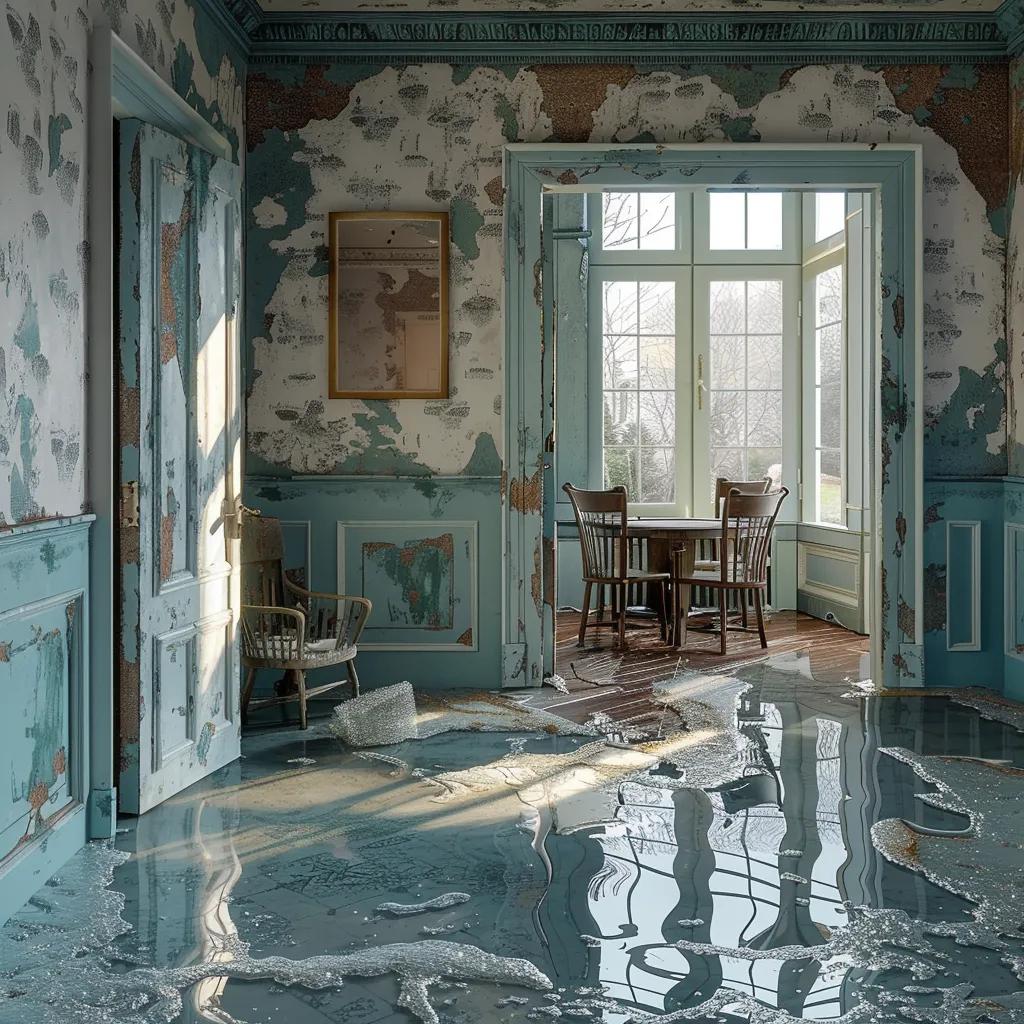
Visible signs of water damage include alarming discoloration, peeling paint, bulging wallpaper, and warped flooring. Stains on ceilings often appear as tell-tale yellowish rings, while baseboard swelling indicates carpet saturation. Here are the primary visible indicators:
- Obvious water stains or yellow patches on walls or ceilings.
- Bubbling or peeling paint and plaster.
- Warped or buckling hardwood floors and laminate.
- Rust or corrosion on metal fixtures and fasteners.
Every visible clue is a critical signal, guiding our experts to probe deeper with specialized tools, leading into our advanced hidden damage detection methods.
How Can You Detect Hidden Water Damage in Your Home?
Hidden water damage often reveals itself through persistent musty odors, unexpected spikes in water bills, or the faint, unsettling sound of dripping inside walls. Moisture can lurk behind insulation or beneath subflooring without any surface evidence, silently destroying your home. Common hidden indicators include:
- A persistent, pervasive moldy smell in closets, basements, or under sinks.
- Unexplained, sudden increases in water usage on your utility bill.
- Sounds of water running or dripping when all faucets are off.
- Cold spots on walls or floors suggesting evaporative cooling from hidden moisture.
Evaluating these subtle, yet critical, signs demands advanced inspection tools to confirm and precisely map moisture hidden from plain sight.
What Structural Indicators Signal Serious Water Damage?
When moisture compromises load-bearing elements, dangerous structural red flags emerge such as bulging walls, ominous cracks in brickwork, and sagging ceilings. Our expert inspectors meticulously look for:
- Vertical or stair-step cracks in foundation walls.
- Bowing or buckling of load-bearing walls.
- Sagging or dislodged ceiling drywall.
- Gaps between walls and floors where baseboards pull away.
Identifying these serious symptoms demands an immediate, comprehensive assessment process, ensuring no weakened supports go unnoticed and your home’s safety is restored.
Which Professional Tools and Techniques Are Used for Water Damage Inspection?
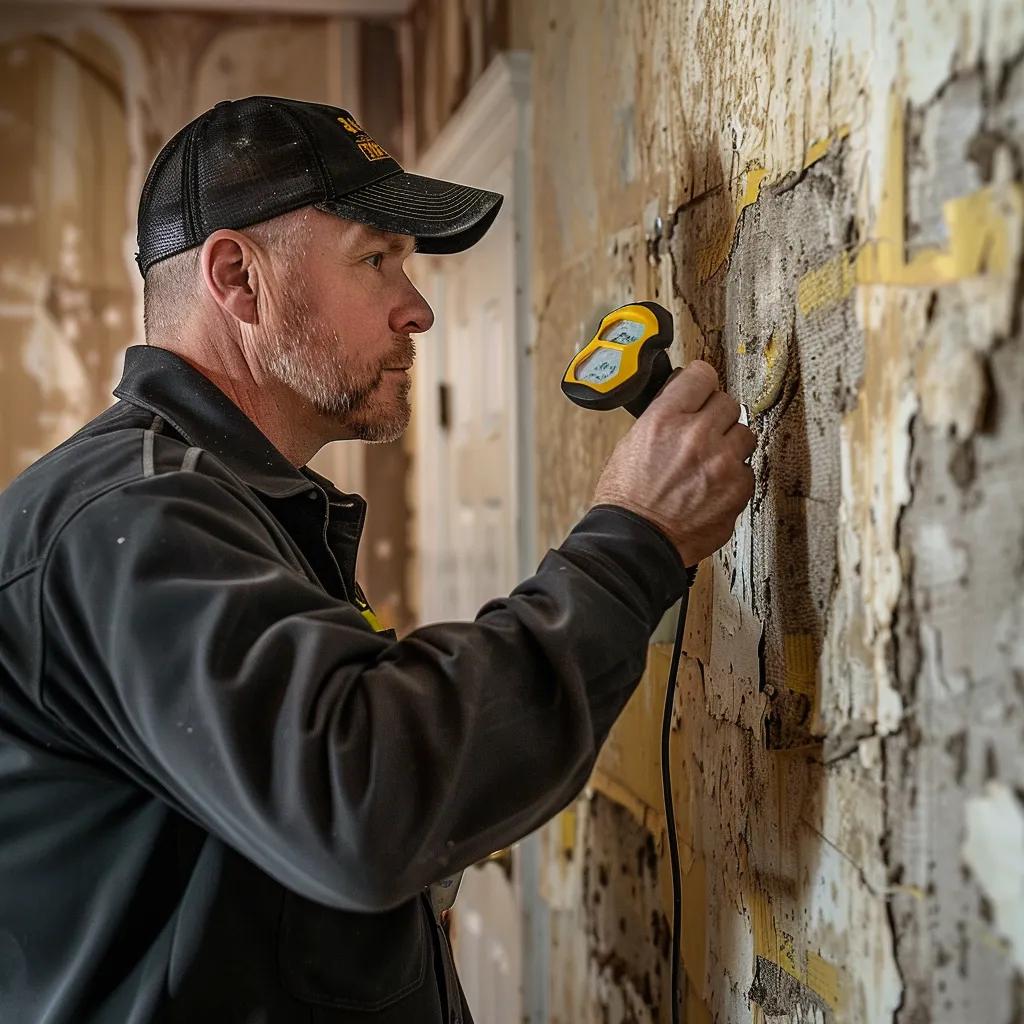
Our certified inspectors leverage cutting-edge moisture meters, advanced infrared cameras, sophisticated moisture mapping software, precise acoustic leak detectors, and accurate hygrometers to reveal and quantify hidden moisture. Each tool is a vital piece of the puzzle, allowing us to build a complete, undeniable moisture profile.
How Do Moisture Meters Work and What Types Are There?
Moisture meters precisely measure moisture content in materials by either penetrating probes or non-invasive surface scanning. Two main types exist:
| Entity | Attribute | Value |
|---|---|---|
| Pin Moisture Meter | Mechanism | Two metal pins inserted into material to measure electrical resistance |
| Pinless Moisture Meter | Technology | Non-invasive electromagnetic sensor scans moisture below surface |
| Hygrometer | Measurement | Relative humidity reading to assess ambient moisture levels |
Moisture meters provide the precise moisture readings that dictate our targeted drying strategies, transitioning our inspectors to thermal imaging for unparalleled hidden moisture detection.
Moisture Meter Technology
Moisture meters are crucial tools for assessing water damage, employing either pin-based or pinless technology to measure moisture content in materials. Pin meters use probes to measure electrical resistance, while pinless meters use electromagnetic sensors for non-invasive scanning, ensuring no hidden moisture is missed.
This guide provides insight into the use of non-destructive methods, such as pinless meters, which are essential for detecting hidden moisture, as discussed in the article.
How Does Thermal Imaging Detect Hidden Moisture?
Thermal imaging cameras detect subtle temperature differentials on surfaces, instantly revealing cool spots where moisture evaporates and cools building materials. By visualizing these hidden anomalies, our professionals pinpoint leaks behind walls or under flooring without invasive, destructive probing. Our inspectors expertly interpret color-coded heat maps to target moisture removal and remediation with surgical precision.
What Is Moisture Mapping and How Does It Help Visualize Damage?
Moisture mapping integrates critical moisture meter readings and thermal images into sophisticated, software-generated diagrams that vividly illustrate moisture spread throughout your structure. A moisture map highlights intensity gradients—ranging from dry (green) to dangerously saturated (red)—enabling precise, efficient drying plans and ironclad documentation for insurance claims. This powerful visualization aligns our restoration efforts with the exact, undeniable moisture footprint.
What Other Advanced Detection Methods Are Available?
Beyond our state-of-the-art meters and cameras, our inspectors utilize acoustic leak detectors to listen for the tell-tale sounds of water flow within pipes and ultrasonic sensors to identify sound waves generated by escaping water. Smart leak detectors placed under appliances send real-time alerts to smartphones, while thermal hygrometers measure combined temperature and humidity to calculate dew point and condensation risk. These powerful, complementary techniques ensure *no* hidden moisture escapes our detection, leading into our detailed, comprehensive assessment process.
What Is the Step-by-Step Water Damage Assessment Process by Professionals?
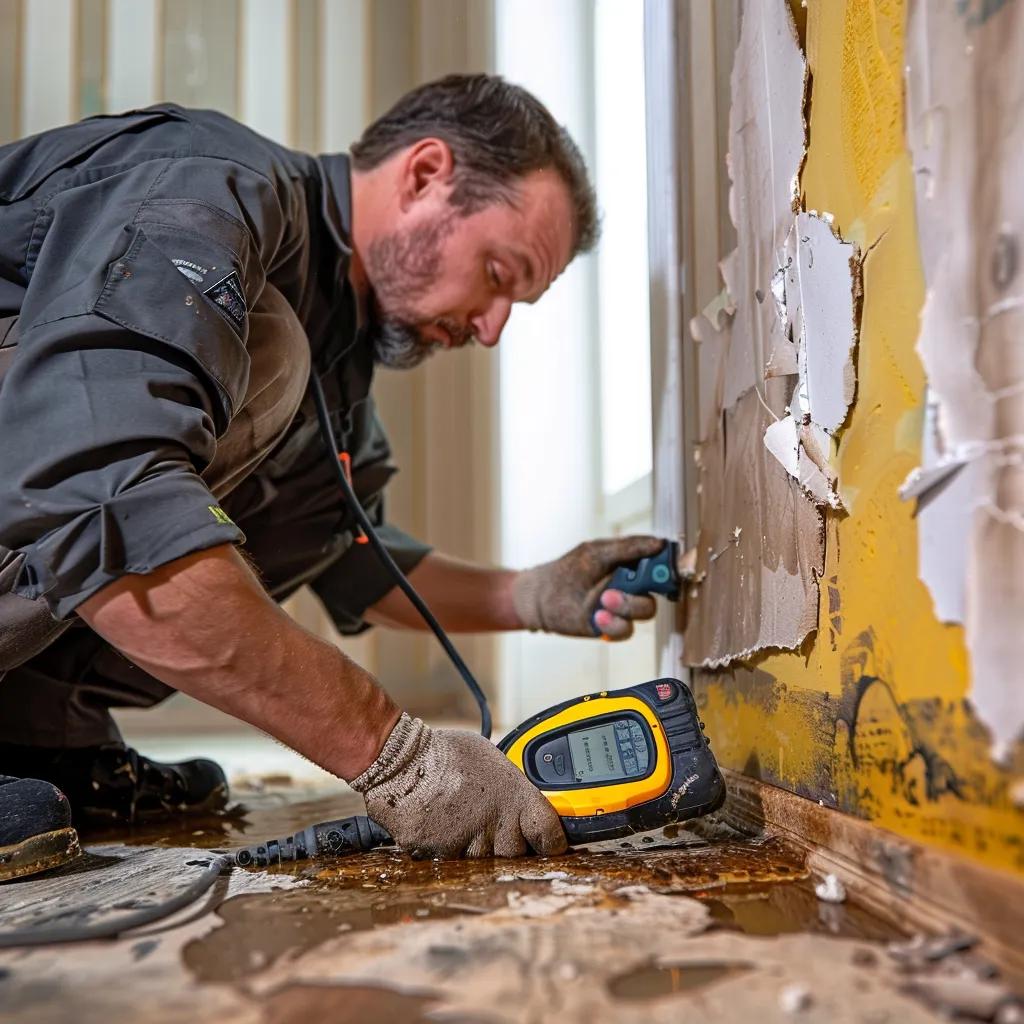
Our structured assessment process guarantees the safe, accurate identification of water intrusion sources and the full extent of damage. When you choose National Emergency Water Damage Experts, you’re choosing a streamlined, IICRC-compliant methodology designed for your peace of mind.
What Happens During the Initial Water Damage Inspection?
The initial inspection begins immediately with a critical safety check for electrical hazards and structural stability. Our inspectors then conduct a thorough visual walk-through to identify wet zones and potential sources. They meticulously document all observable damage, take precise moisture readings at key points, and capture baseline thermal images. Completing these crucial steps within the first hour lays the critical foundation for precise, targeted moisture mapping.
How Is the Source and Extent of Water Damage Determined?
After visual and thermal scans, our specialists use advanced moisture meters to quantify moisture levels in walls, ceilings, and floors. Pin readings confirm saturation depth, while pinless scans efficiently cover large areas. Combining these critical readings with detailed moisture maps and thermal imagery reveals both the exact water source—whether a burst pipe, roof leak, or flood intrusion—and the full, undeniable scope of impacted materials.
How Do Professionals Document and Report Water Damage for Insurance?
Accurate documentation is paramount. It includes detailed moisture logs, high-resolution thermal images, comprehensive moisture maps, and precise written descriptions of damage categories and classes. Our reports adhere to standard templates meticulously recognized by insurance carriers, ensuring every affected area, measurement, and remediation recommendation is recorded with unparalleled accuracy. This unparalleled level of transparency accelerates your claim approval and ensures maximum coverage for our restoration services.
What Role Do IICRC Standards Play in Water Damage Assessment?
The IICRC S500 guidelines define the absolute industry-best practices for inspection, mitigation, and restoration. Our certified professionals rigorously follow these standards to classify water damage, select the most appropriate drying equipment, and maintain stringent safety protocols. Our unwavering adherence to IICRC standards guarantees consistent, superior quality and seamless insurance compliance, forming the backbone of our rigorous assessment process.
IICRC Standards in Water Damage Assessment
The Institute of Inspection, Cleaning and Restoration Certification (IICRC) sets the gold standard for water damage assessment and restoration. Adhering to these standards ensures consistent quality and supports insurance compliance, forming the backbone of a rigorous assessment process that you can trust.
The IICRC standards are central to the article’s discussion of professional water damage inspection and restoration practices.
Why Is Professional Water Damage Inspection Crucial for Homeowners?
Professional inspection isn’t just a recommendation—it’s your best defense. It delivers the accuracy, efficiency, and ironclad documented proof that dangerous DIY methods simply cannot match. Engaging our experts early prevents escalating costs and severe health hazards while providing seamless support for your insurance claims.
What Are the Risks of DIY Water Damage Inspection?
DIY inspections often miss insidious hidden moisture, leading to undetected, rampant mold growth and irreversible structural decay. Homeowners without specialized tools may dangerously misclassify damage severity, resulting in inadequate drying and prolonged, costly restoration timelines. These dangerous oversights don’t just multiply repair costs; they escalate health risks, putting your family in jeopardy.
How Does Professional Expertise Save You Time and Money?
Our certified inspectors deploy advanced tools to pinpoint moisture quickly and precisely, eliminating guesswork and preventing unnecessary, costly demolition. Precise moisture mapping shortens drying cycles dramatically and curbs exorbitant mold remediation fees. Our detailed reports fast-track your insurance reimbursements, putting homeowners back in a dry, safe environment faster and at a significantly lower total cost.
How Does Early Detection Prevent Costly Repairs and Health Hazards?
By identifying water intrusion and microbial growth within the critical 24–48 hours, our professionals prevent fungal colonies from spreading uncontrollably. Early remediation preserves wood framing, drywall, and insulation, avoiding extensive, devastating reconstruction work. Prompt action safeguards your air quality and family health, aligning with our best-practice moisture control principles.
How Does Our 24/7 Emergency Service Support Your Water Damage Needs?
National Emergency Water Damage Experts provides around-the-clock rapid response to contain water intrusion and begin inspection within hours of your call. Our fully equipped teams adhere to stringent IICRC standards, deploy advanced moisture meters and thermal cameras immediately upon arrival, and deliver instant moisture mapping to guide precise drying and restoration. This unparalleled level of readiness stops damage progression in its tracks and restores safety and peace of mind without a moment’s delay.
How Can Homeowners Recognize and Respond to Water Damage Emergencies?
When you suspect flooding or leaks, knowing the right first steps can dramatically minimize damage and protect your family until our professionals arrive.
What Immediate Steps Should You Take When You Suspect Water Damage?
First, shut off the main water supply immediately to stop further flooding. Turn off electricity in affected areas to prevent dangerous shocks. Remove all valuables from the water path and place buckets under active leaks. Document all visible damage with clear photos before extraction begins. These immediate emergency actions are crucial, setting the stage for our efficient, professional inspection and mitigation.
How Do Professionals Prioritize Emergency Water Damage Inspections?
Our experts triage based on safety, source control, and damage extent. They secure all live electrical hazards, isolate water sources, and target the most severely saturated zones first. This strategic, prioritized approach ensures critical areas dry rapidly and prevents dangerous mold proliferation while the full assessment unfolds.
When Should You Contact National Emergency Water Damage Experts?
Don’t wait. Any sign of uncontrolled leaks, visible flooding, or even the *slightest* suspicion of hidden moisture—even without surface evidence—demands an immediate call. Our 24/7 hotline at nationalemergencywaterdamageexperts.com connects you directly to certified technicians who dispatch within hours to assess, contain, and restore your home.
What Are Common Questions About Water Damage Inspection Methods?
Homeowners often ask concise questions about the assessment process, tools used, and the insidious signs to watch for behind walls. Our quick answers clarify the inspection journey and highlight the undeniable advantages of expert intervention.
What Is Water Damage Assessment and Why Is It Important?
Water damage assessment is the systematic, critical process of identifying moisture sources, precisely measuring saturation levels, and classifying damage severity to guide effective restoration. This crucial first step ensures targeted drying, prevents dangerous mold growth, and meticulously documents conditions for seamless insurance coverage.
How Do Professionals Detect Hidden Water Leaks?
Our certified inspectors use advanced thermal imaging cameras to spot cool spots where moisture accumulates behind walls and ceilings, and precise moisture meters to quantify hidden dampness in building materials without invasive, destructive probing.
What Are the Signs of Water Damage Behind Walls?
Hidden damage behind walls often reveals itself through persistent musty odors, unexplained increases in utility bills, peeling paint, warped drywall, and the unsettling sound of dripping when no fixtures are in use.
How Does Moisture Mapping Improve Inspection Accuracy?
Moisture mapping compiles critical meter readings and infrared scans into a clear, color-coded diagram that vividly visualizes moisture distribution and intensity, allowing our professionals to target drying equipment precisely where it’s needed most for maximum efficiency.
Don’t let hidden water damage destroy your home and health. Call National Emergency Water Damage Experts *now* at nationalemergencywaterdamageexperts.com for a comprehensive, IICRC-compliant inspection. Protect your home from these insidious threats. Our 24/7 rapid-response teams combine advanced tools, precise moisture mapping, and certified expertise to detect and halt water damage before it escalates into costly repairs and severe health hazards. Trust our proven, rapid-response methods to restore safety, structural integrity, and your peace of mind.