
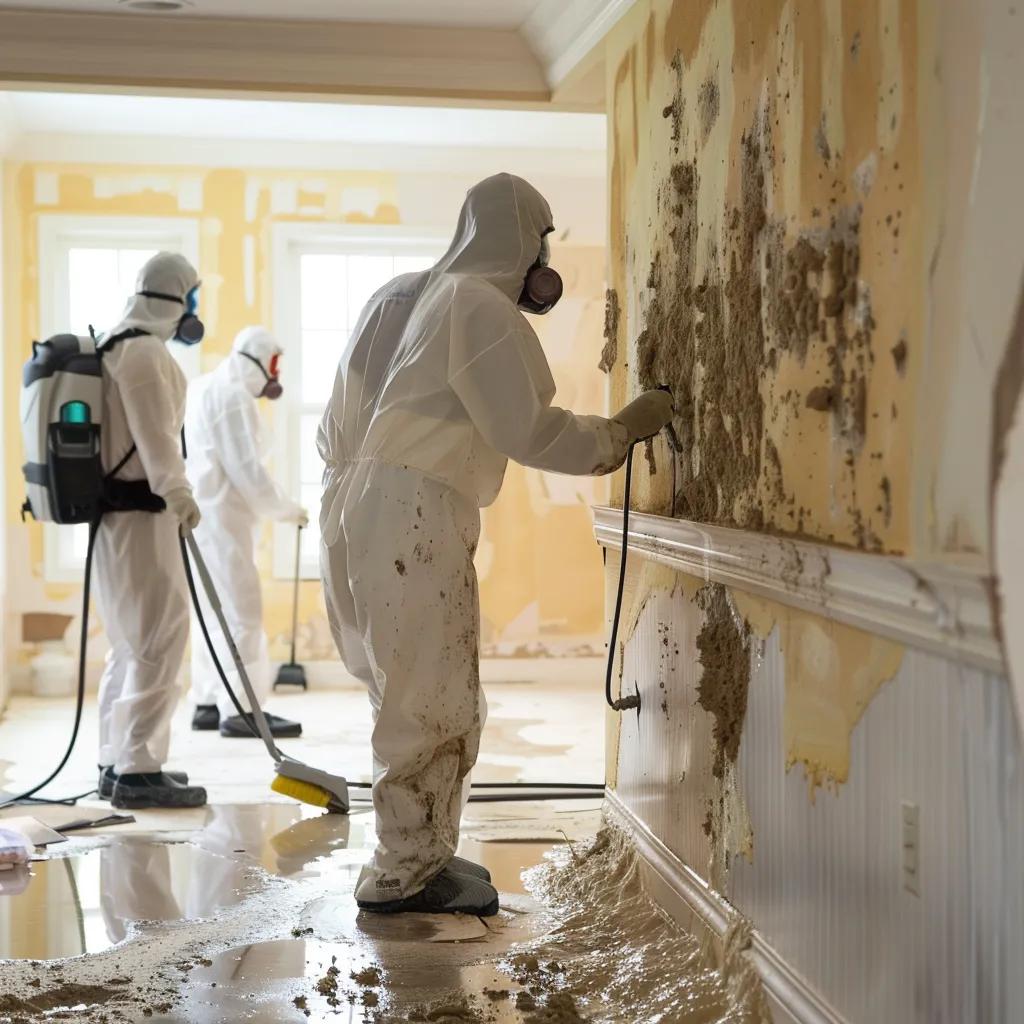
Mold cleanup costs vary widely, from a small job in a single closet to a whole-home project after a flood. No honest company can give a firm price without seeing it, but you can understand what drives the cost and how to keep it down.
The Biggest Cost Factors
1. How much area is affected
The square footage of growth, and how far it has spread inside walls, ceilings and under floors, is the largest factor. Visible mold is often only part of it.
2. Where the mold is
Mold on a bathroom wall is simpler than mold in an attic, inside wall cavities, in ductwork or under cabinets, which take more labor and removal to reach.
3. What materials are involved
Porous materials like drywall, insulation and carpet usually must be removed and replaced. Hard surfaces can often be cleaned. More removal means more cost for both remediation and rebuilding.
4. Containment and air filtration
Larger jobs need sealed containment and HEPA air filtration so spores do not spread to the rest of the home.
5. The moisture source
The leak or humidity problem that caused the mold must be fixed, whether that is a plumber, a roofer or an AC technician. That is a separate cost but essential, or the mold comes back.
6. Rebuilding
Replacing drywall, insulation, flooring and cabinets after removal is often a significant part of the total.
Testing: When It Is Worth Paying For
Visible mold with a known water source usually does not need testing to justify removal. Testing can make sense when you smell mold but cannot find it, after remediation to confirm the area is clean, or for a real estate transaction or dispute. Testing should be done by an independent professional, not the company doing the removal.
Does Insurance Pay for Mold Removal in Florida?
Sometimes. Many Florida homeowners policies cover mold that results from a covered, sudden water loss, such as a burst pipe, but often cap mold coverage at a much lower amount than the rest of the policy. Mold from long-term leaks, ongoing humidity or neglected maintenance is usually excluded. Read the mold provisions in your policy, and document the original water damage. See our article on coverage limits and deductibles.
How to Keep Mold Costs Down
- Dry water damage fast. Mold can start in 24 to 48 hours. Professional drying right after a leak is far cheaper than remediation later.
- Do not disturb it. Scrubbing or scraping can spread spores and enlarge the job.
- Fix leaks promptly, including slow AC and plumbing drips.
- Keep humidity down by running the AC, even when you are away.
- Act on musty smells before growth spreads.
What a Good Remediation Includes
Finding and fixing the moisture source, containment, protective equipment, removal of affected porous materials, cleaning and treatment of remaining surfaces, drying until moisture readings are normal, and rebuilding. If any of those steps is missing from a quote, ask why. Learn more on our mold remediation page.
Common Mold Situations in South Florida Homes
| Situation | What usually drives the cost |
|---|---|
| Under a sink or behind a toilet | Cabinet base and drywall removal, fixing the leak, rebuilding a small area. |
| AC closet or around an air handler | Closet drywall, insulation, possibly ductwork cleaning, fixing the condensate leak. |
| Attic | Insulation removal, cleaning roof sheathing and framing, fixing the roof or AC leak. |
| Inside a bathroom wall | Opening the wall, possibly tile, fixing the shower or plumbing leak. |
| After a flood | Drywall and insulation removal above the water line across many rooms, disinfecting and drying. |
Comparing Quotes
When comparing mold remediation quotes, make sure each includes the same scope: the areas to be contained, materials to be removed, cleaning and treatment, air filtration, drying and disposal. A much lower quote may leave out containment or drying, which can lead to mold coming back. Ask whether rebuilding is included or separate, and who will fix the moisture source.
Mold in Condos and Rentals
In condos, responsibility for mold usually follows responsibility for the water that caused it: your unit’s interior under your HO-6, building elements under the association. Renters should notify their landlord in writing; landlords are generally responsible for fixing leaks and the damage they cause to the building. In either case, document the mold and the water source with photos.
When to Leave It to Professionals
A few small spots on a hard surface like tile grout can often be cleaned by a homeowner. Larger areas, mold inside walls or ceilings, mold after flooding or sewage, or mold in a home with anyone who has asthma, allergies or a weakened immune system should be handled with containment and protective equipment by professionals.
This article is general information for South Florida property owners, not legal or insurance advice. Your policy language controls, and your agent, a licensed public adjuster or an attorney can advise on your situation.
Mold Cost Questions
Can you give me a price over the phone?
Not an accurate one. Cost depends on how far the mold has spread, where it is and what materials are involved, which has to be seen.
Is mold removal covered by insurance?
Sometimes, when it results from a covered sudden water loss, usually with a lower dollar cap. Mold from long-term leaks or humidity is usually excluded.
Why is the quote higher than the visible mold?
Mold often grows inside walls and under materials. Moisture mapping and inspection reveal the full extent.
Is it cheaper to dry water damage right away?
Almost always. Fast drying prevents most mold, which avoids remediation entirely.